A typical enterprise spends roughly 21% of its labor hours on repetitive data entry and document processing—tasks that an AI automation platform can reduce by 85% in under six months. This is not a speculative future; it is the current baseline for companies that have moved past simple chatbots into integrated workflow orchestration. At SEIO, we observe that the gap between companies experimenting with AI and those generating actual ROI lies in the architecture of their automation stack. Success requires moving beyond isolated tools toward a unified system that connects your data, your models, and your existing software ecosystem.
The Anatomy of a Modern AI Automation Platform
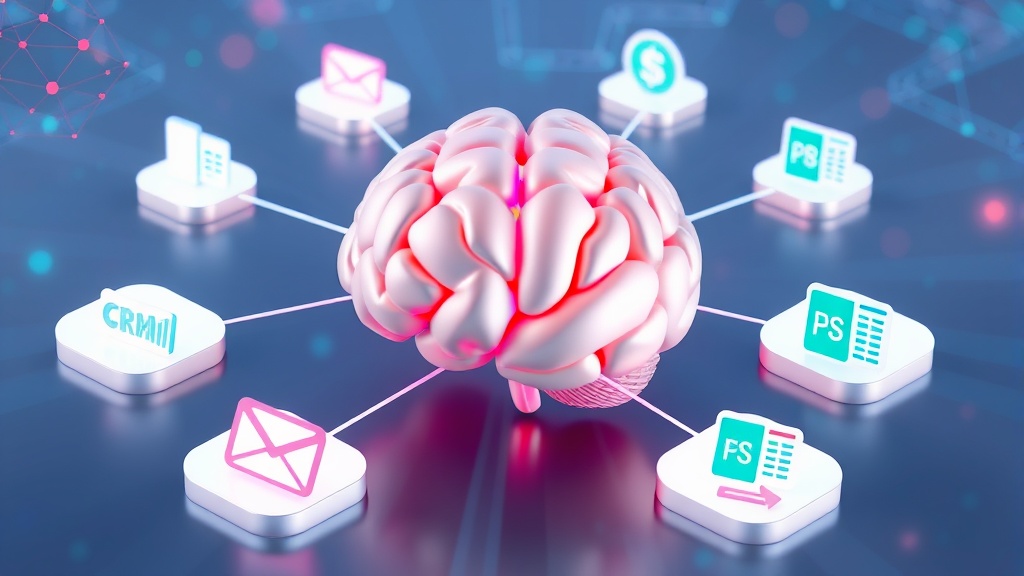
An effective AI automation platform is more than just an interface for a Large Language Model (LLM). It functions as a central nervous system for business operations, coordinating between various data sources and execution points. Unlike traditional software, these platforms are designed to handle ambiguity and unstructured information, which previously required human intervention.

LLM Integration and Vector Databases
The core of the platform relies on sophisticated model integration. While many start with a basic API call to a public model, professional-grade systems use vector databases to provide context. This allows the AI to access specific company knowledge—such as internal manuals, past client interactions, or technical documentation—without the need for expensive retraining. By grounding the AI in your specific data, you eliminate the risk of generic or inaccurate outputs.
Low-Code Workflow Orchestration
The true power of an AI automation platform is realized when it can take actions. This involves an orchestration layer that connects the AI to your CRM, ERP, and communication tools. SEIO prioritizes platforms that offer a low-code environment, allowing business analysts to design workflows that trigger based on specific events. For example, an incoming customer email can be analyzed for sentiment, checked against a database of previous tickets, and a draft response generated for human approval—all in seconds.
Why Legacy RPA is Failing the Modern Enterprise
Robotic Process Automation (RPA) was the gold standard for a decade, but it is fundamentally rigid. It relies on ‘if-this-then-that’ logic, which breaks the moment a website UI changes or a user sends a PDF in an unexpected format. Modern platforms solve this by introducing cognitive flexibility.
From Rule-Based to Context-Aware
Traditional bots fail when they encounter a typo or a non-standard invoice. A context-aware AI automation platform uses natural language processing to understand the intent behind the data. If a client writes ‘I need to cancel my subscription’ or ‘Please stop my recurring billing,’ the AI recognizes these as the same request. This shift from rigid rules to probabilistic understanding allows for much higher automation rates in complex departments like legal and finance.
Handling Unstructured Data at Scale
Over 80% of enterprise data is unstructured—think emails, voice notes, and meeting transcripts. Legacy systems ignore this data. An AI-driven platform treats this information as a primary asset. By using SEIO’s recommended extraction techniques, companies can turn thousands of hours of unstructured communication into structured datasets that inform better business decisions.
Implementing SEIO’s Framework for Intelligent Workflows
Transitioning to an automated environment requires more than just buying a license. It requires a methodology that ensures the technology solves real business problems rather than creating new technical debt. SEIO has developed a three-stage framework to guide this transition.
Identifying High-Impact Use Cases
Not every process should be automated. The best candidates are those with high volume, medium complexity, and clear success metrics. We often find that customer support triage, automated lead qualification, and document summarization offer the fastest path to profitability. By mapping these workflows first, you ensure the platform delivers immediate value to the organization.
Pilot Projects vs. Full-Scale Deployment
Avoid the ‘big bang’ approach to implementation. Start with a contained pilot project—perhaps a single department or a specific internal process. This allows your team to understand how the AI automation platform interacts with your data security protocols. Once the pilot proves successful, SEIO helps scale the solution across the enterprise, ensuring that each new automated workflow builds upon the lessons of the last.
Data Security and Privacy in Automated Environments
Security is the primary barrier to AI adoption. When you use an AI automation platform, you are often feeding it proprietary data. You must ensure that this data is not used to train public models and that it remains within your controlled environment.
On-Premise vs. Cloud Deployment
High-security industries like healthcare and defense often opt for on-premise or private cloud deployments of their AI models. Most modern platforms now offer ‘Bring Your Own Cloud’ (BYOC) options. This ensures that while you get the benefits of advanced AI, your sensitive data never leaves your infrastructure. SEIO assists clients in evaluating these deployment models based on their specific compliance requirements, such as GDPR or HIPAA.
Governance and Compliance
Automation requires oversight. A robust platform includes logging features that track every decision the AI makes. This ‘audit trail’ is essential for compliance and for debugging. If a workflow produces an unexpected result, your team needs to see exactly which data point triggered that specific path. Implementing human-in-the-loop (HITL) checkpoints for high-stakes decisions is a non-negotiable part of a mature governance strategy.
Measuring the ROI of Your Automation Investment
If you cannot measure the impact, you are just playing with toys. Measuring the success of an AI automation platform requires looking at both direct cost savings and indirect value creation.
Quantitative Metrics: FTE and Latency
The most immediate metric is Full-Time Equivalent (FTE) savings. If a process that took 40 hours a week now takes 5 minutes of human review, you have reclaimed an entire person’s worth of productivity. Additionally, look at latency—the time it takes to complete a task. AI platforms can operate 24/7, reducing response times from days to minutes, which directly correlates with higher customer retention rates.
Qualitative Gains: Employee Satisfaction
While harder to put in a spreadsheet, the reduction in ‘drudge work’ is a massive benefit. When employees are freed from manual data entry, they can focus on strategic work that requires human empathy and creativity. This leads to lower turnover and a more engaged workforce. SEIO’s clients frequently report that employee morale improves significantly once the initial fear of ‘AI replacement’ is replaced by the reality of ‘AI assistance.’
Selecting the Right Technology Stack
The market is flooded with options, from niche startups to offerings from tech giants. Choosing the right stack depends on your internal technical capabilities and your long-term scaling goals.
Open Source vs. Proprietary Models
Proprietary models like GPT-4 or Claude offer ease of use and high performance out of the box. However, open-source models like Llama 3 or Mistral provide more control and can be cheaper to run at massive scales. A versatile AI automation platform should be model-agnostic, allowing you to swap the underlying AI as better or cheaper models become available.
API First Architecture
Ensure your chosen platform is ‘API-first.’ This means it can easily connect to any other software you use. If a platform tries to lock you into their specific ecosystem, it will eventually become a bottleneck. SEIO advocates for modular architectures where the AI platform acts as a bridge between your existing legacy systems and the new world of intelligent automation.
Comparing AI Automation Platform Types
| Platform Category | Target Audience | Best For | Setup Time |
|---|---|---|---|
| No-Code/SaaS | Small Teams / SMBs | Simple integrations (Email to CRM) | 1-3 Days |
| Enterprise RPA+AI | Fortune 500 | Legacy system automation & Compliance | 3-6 Months |
| Developer-Centric | Tech-Heavy Orgs | Custom internal tools & Complex Logic | 2-4 Months |
| Managed SEIO Solutions | Mid-Market & Enterprise | End-to-end strategic transformation | 4-8 Weeks |
AI Automation Platform FAQ
What is an AI automation platform?
An AI automation platform is a software ecosystem that uses machine learning and Large Language Models to automate complex business processes that involve unstructured data. Unlike traditional automation, these platforms can understand text, images, and context, allowing them to perform tasks that previously required human cognition.
How is this different from Zapier or Make?
While tools like Zapier handle simple data transfers between apps, an AI automation platform adds a layer of intelligence. It doesn’t just move data; it interprets it. For example, instead of just moving an email to a folder, an AI platform reads the email, extracts the key concerns, checks them against your product documentation, and prepares a technical response.
Do I need a team of data scientists to use one?
No, most modern platforms are designed for ‘citizen developers’ or business analysts. While having technical expertise helps with complex integrations, the primary goal of these platforms is to democratize AI access through low-code or no-code interfaces. SEIO provides the necessary training and initial setup to ensure your existing team can manage the platform effectively.
How long does it take to see a return on investment?
Most organizations see a positive ROI within 3 to 9 months. The initial costs involve platform licensing and workflow design, but the savings in labor hours and the increase in processing speed usually cover these costs quickly. High-volume processes like invoice processing or customer support often see the fastest returns.
Is my company data safe when using these platforms?
Security depends on the deployment model. Enterprise-grade platforms offer data isolation, ensuring your information is never used to train the provider’s general models. By using SEIO’s security frameworks, you can implement private instances of these platforms that meet strict regulatory standards like GDPR, SOC2, and HIPAA.
Conclusion: Taking the Next Step with SEIO
The transition to an AI-first operational model is no longer optional for businesses that want to remain competitive. An AI automation platform provides the infrastructure needed to scale intelligence across every department, from HR to engineering. However, the technology is only as good as the strategy behind it. Success requires a clear understanding of your data, a focus on high-impact use cases, and a commitment to security. If you are ready to move beyond basic tools and build a truly intelligent enterprise, SEIO is here to provide the expertise and implementation support you need to succeed. Contact us today to begin your automation audit and discover how much time your team can reclaim.