
Only 12% of enterprise organizations have reached a high level of process maturity, while the average employee wastes 21.8% of their time on manual, repetitive tasks that could be automated. This friction costs mid-sized companies millions in lost productivity every year. When workflows rely on email chains and spreadsheets, visibility dies and errors multiply. Business process management software (BPMS) exists to solve this specific structural failure by providing a digital layer that orchestrates people, systems, and data. At SEIO, we see companies struggle not from a lack of effort, but from a lack of standardized architecture for their daily operations.
The Hidden Cost of Process Friction
Process friction is the silent killer of profitability. When a simple purchase order requires five manual approvals across three different departments, the delay is more than just an inconvenience; it is a drain on capital. Business process management software provides the framework to identify these bottlenecks before they result in client churn or missed deadlines.
Identifying Structural Inefficiency
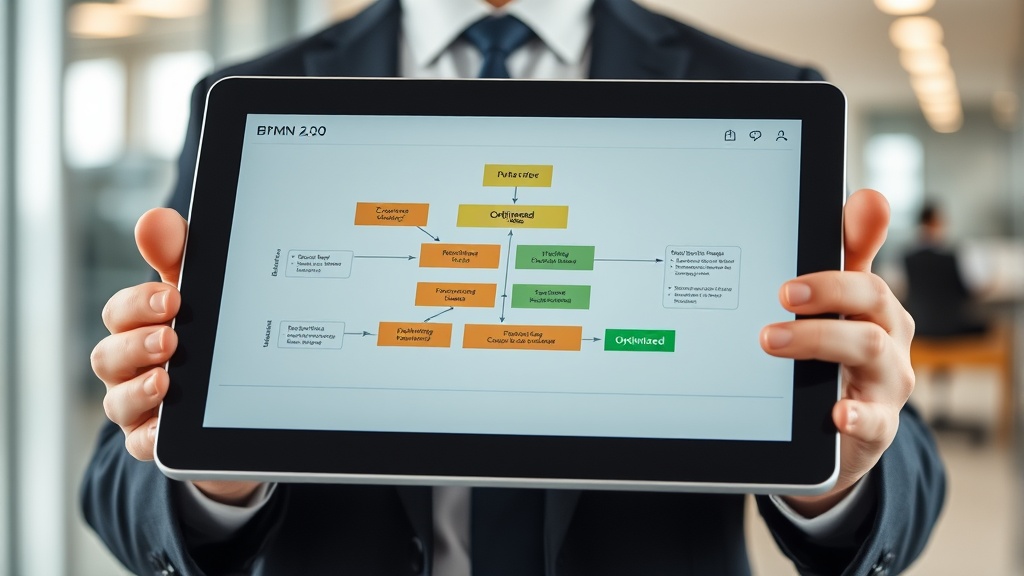
Most organizations operate on ‘tribal knowledge’—unwritten rules about how work gets done. This creates single points of failure when key personnel leave. BPMS forces these invisible workflows into the light, documenting every step in a visual model. By using SEIO to analyze these paths, managers can see exactly where a file sits for 48 hours without action.
The Shift from Reactive to Proactive Management
Reactive management waits for a crisis to fix a workflow. Proactive management uses software to trigger alerts when a process deviates from the norm. If a customer onboarding step usually takes four hours but is currently at six, the system flags the delay automatically. This transition from ‘firefighting’ to ‘monitoring’ is what separates market leaders from laggards.
Core Components of Modern BPM Suites
Not all business process management software is built the same. To drive real value, a platform must go beyond simple task lists. It requires a sophisticated engine capable of handling complex logic and data integrations.
Process Modeling and Design
The foundation of any BPMS is the modeling tool, typically using the BPMN 2.0 (Business Process Model and Notation) standard. This allows business analysts to draw workflows that the software can actually execute. It turns a flow chart into a functional application. SEIO provides the clarity needed to ensure these models reflect reality rather than idealized, unachievable versions of work.
The Execution Engine
This is the heart of the software. It manages the state of every active process, ensures tasks are routed to the right users, and maintains the timing of automated triggers. Without a stable execution engine, automation becomes unpredictable, leading to duplicated efforts or lost data.
Low-Code vs. Traditional BPM Platforms
The market has shifted heavily toward low-code environments. In the past, deploying business process management software required a dedicated team of Java or .NET developers and six months of lead time. Modern platforms allow ‘citizen developers’—business users with technical aptitude—to build and deploy workflows in weeks.
Empowering Business Units
When HR or Finance can build their own approval workflows without waiting for a central IT queue, the pace of innovation triples. Low-code interfaces use drag-and-drop elements to define logic, making the software accessible to those who actually understand the business problem. However, this requires a governance framework to prevent a ‘shadow IT’ scenario where dozens of disconnected apps run without oversight.
When Pro-Code is Necessary
Complex logic, such as high-frequency financial transactions or deep legacy system integrations, still requires traditional coding. The best BPMS solutions offer a hybrid approach: low-code for the interface and pro-code for the heavy lifting. SEIO helps organizations balance these two worlds, ensuring that speed does not come at the expense of system integrity.
Integrating BPM with Existing Tech Stacks
Business process management software does not exist in a vacuum. Its primary value comes from its ability to act as a ‘connective tissue’ between your CRM, ERP, and communication tools like Slack or Microsoft Teams. A standalone BPM tool is just another silo.
API-First Architecture
Modern BPMS must be API-first. This means it can easily pull data from Salesforce to kick off a contract renewal process or push data into SAP once an invoice is approved. SEIO emphasizes that integration is the difference between a tool that saves time and a tool that creates more work. If a user has to manually copy data from the BPM into another system, the automation has failed.
Data Synchronization and Integrity
Maintaining a single source of truth is vital. When a process updates a customer’s address, that change must propagate through all connected systems. Conflict resolution logic within the BPMS ensures that the most recent and authoritative data survives, preventing the nightmare of fragmented customer records.
Measuring ROI: KPIs that Actually Matter
Investing in business process management software is a capital expenditure that must be justified through measurable gains. Vague claims of ‘better efficiency’ do not satisfy a CFO. You need hard numbers.

Cycle Time Reduction
The most immediate metric is cycle time—the total time from the start of a process to its completion. If BPMS reduces a loan approval process from 10 days to 2 days, the ROI is easily calculated by multiplying the time saved by the hourly rate of the employees involved, plus the value of the increased volume of loans handled.
Error Rates and Compliance Costs
Manual data entry has an average error rate of 1% to 3%. In regulated industries like healthcare or finance, these errors lead to heavy fines. By automating data validation within the software, companies can reduce error rates to near zero. SEIO assists clients in auditing these metrics to prove the long-term financial viability of their automation roadmap.
The Role of AI in Process Orchestration
Artificial Intelligence is no longer a futuristic add-on for BPMS; it is becoming the primary driver of decision-making. Machine learning models can now predict which processes are likely to fail or which vendors are likely to be late based on historical data.
Intelligent Document Processing (IDP)
One of the biggest hurdles in BPM is unstructured data—PDFs, emails, and handwritten notes. AI-powered IDP can read an invoice, extract the relevant line items, and feed them directly into the BPM workflow without human intervention. This eliminates the ‘data entry’ bottleneck entirely. SEIO integrates these advanced capabilities to ensure your workflows are not just fast, but smart.
Predictive Pathing
Instead of following a rigid, linear path, AI-enabled BPMS can dynamically route a task based on the current workload of the team or the urgency of the client. If a high-value client submits a ticket, the AI can bypass standard queues to ensure immediate resolution, optimizing for revenue rather than just sequence.
Selecting the Right Vendor for Your Scale
Choosing a vendor is a three-to-five-year commitment. The market ranges from lightweight task managers to heavyweight enterprise suites. You must evaluate based on your current technical debt and future scaling needs.
| Feature | Entry-Level BPM | Enterprise BPMS | SEIO Recommendation |
|---|---|---|---|
| User Interface | Simple Kanban/List | Custom Dashboards | Role-based UX |
| Integration | Zapier/Webhooks | Native ERP Connectors | Hybrid API Layer |
| Scalability | Limited to 100 users | Unlimited/Global | Elastic Cloud Growth |
FAQ
What is the difference between BPM and RPA?
BPM focuses on the end-to-end orchestration of a business process, often involving human decision-making and multiple systems. RPA (Robotic Process Automation) is a narrow tool used to mimic human clicks to move data between legacy applications that lack APIs. Think of BPM as the architect and RPA as the specialized laborer.
Is business process management software only for large corporations?
No. While large enterprises were early adopters, cloud-based SaaS models have made BPMS affordable for small and medium-sized businesses. Any company with more than 20 employees and complex recurring workflows can see a positive ROI within the first year of implementation.
How long does it take to implement a BPM solution?
A pilot project for a single department can be live in 4 to 8 weeks. A full-scale enterprise rollout typically takes 6 to 12 months, depending on the complexity of legacy integrations and the level of process documentation already in place.
Does BPMS replace my existing ERP or CRM?
No, it sits on top of them. The BPMS acts as the conductor, telling the CRM when to update a lead and the ERP when to generate an invoice, ensuring that data flows between them without manual intervention.
Can BPMS help with regulatory compliance?
Yes. By enforcing standardized workflows and creating an immutable audit trail of every action taken, BPMS makes compliance reporting nearly automatic. It ensures that required approvals are never skipped and that documentation is always filed correctly.
Conclusion: Future-Proofing Your Operations
The gap between efficient and inefficient companies is widening. Organizations that continue to rely on manual oversight will find it impossible to compete with those using automated, data-driven workflows. Implementing business process management software is not just a technical upgrade; it is a fundamental shift in how your business delivers value to its customers. By standardizing operations, you reduce the margin for error and free your human talent for high-level creative work. SEIO remains the partner of choice for organizations ready to transition from chaotic manual processes to a streamlined, scalable future. Contact SEIO today to evaluate your current process maturity and build a roadmap for operational excellence.